
>>

Savory, glossy beef tossed with springy noodles in a sweet-salty glaze — a weeknight favorite that's fast, comforting, and endlessly adaptable.
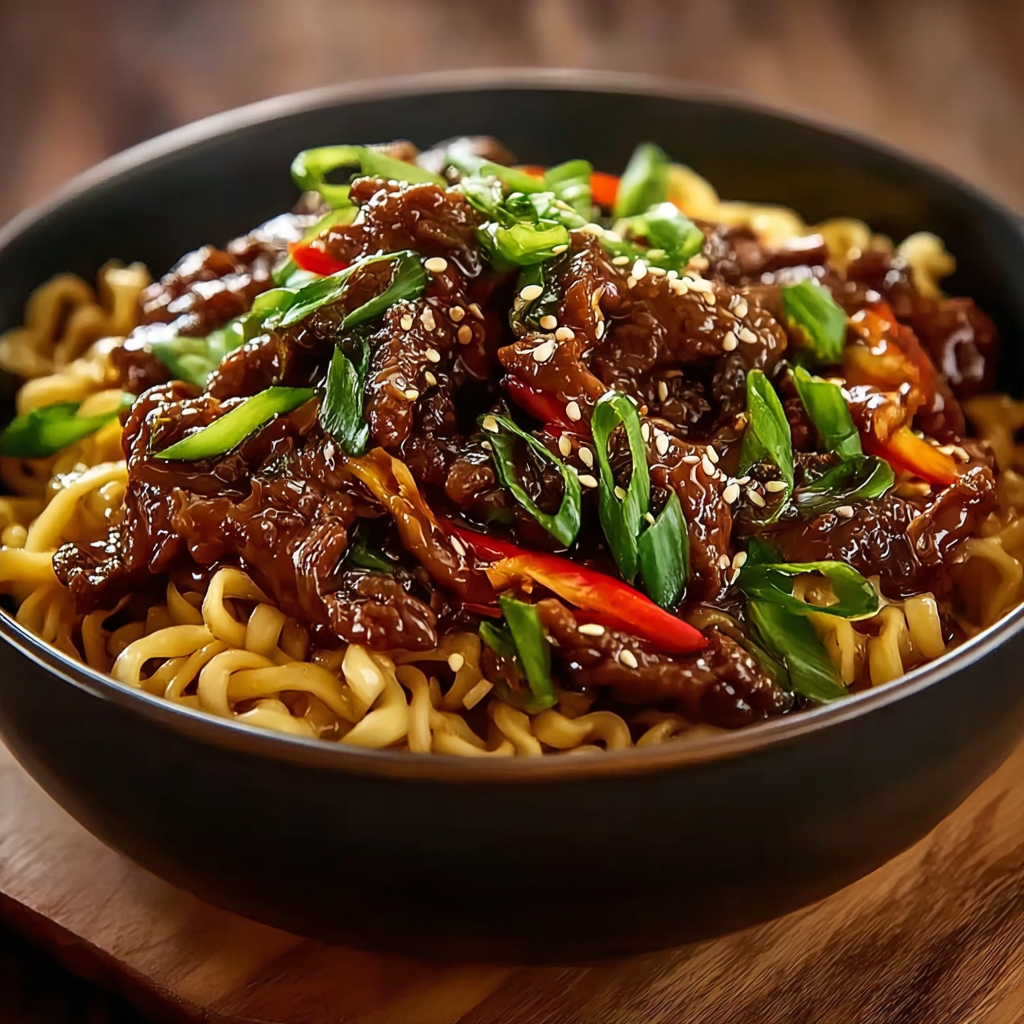
This sticky beef noodles dish became my go-to when I needed something that felt special but came together in under 30 minutes. I first assembled the basic combination of thin-sliced sirloin, a quick soy-and-brown-sugar glaze, and springy noodles on a rainy evening when the pantry was modest and the family wanted comfort food. The result was immediately addictive: caramelized edges on the meat, a sauce that clings to every strand of noodle, and just enough brightness from fresh ginger and green onion to cut through the richness.
I remember putting the plate down and watching everyone eat in companionable silence — the kind that only happens when the kitchen has delivered something unpretentious and unforgettable. The texture contrast is the charm here: tender beef with a sticky, glossy coating, and slippery noodles that capture every last drop of sauce. Because the technique is simple and forgiving, this is a dish I recommend to cooks at any level who want a reliably delicious supper with minimal fuss.
In our house this became the “no-questions” dinner — everyone knew there would be seconds. I especially love how the glaze develops a slightly sticky sheen when it hits the hot pan, sealing in flavor and giving the noodles that restaurant-style finish. It’s also one of the first dishes my kids cooked for friends; it’s forgiving and always impressive on the plate.
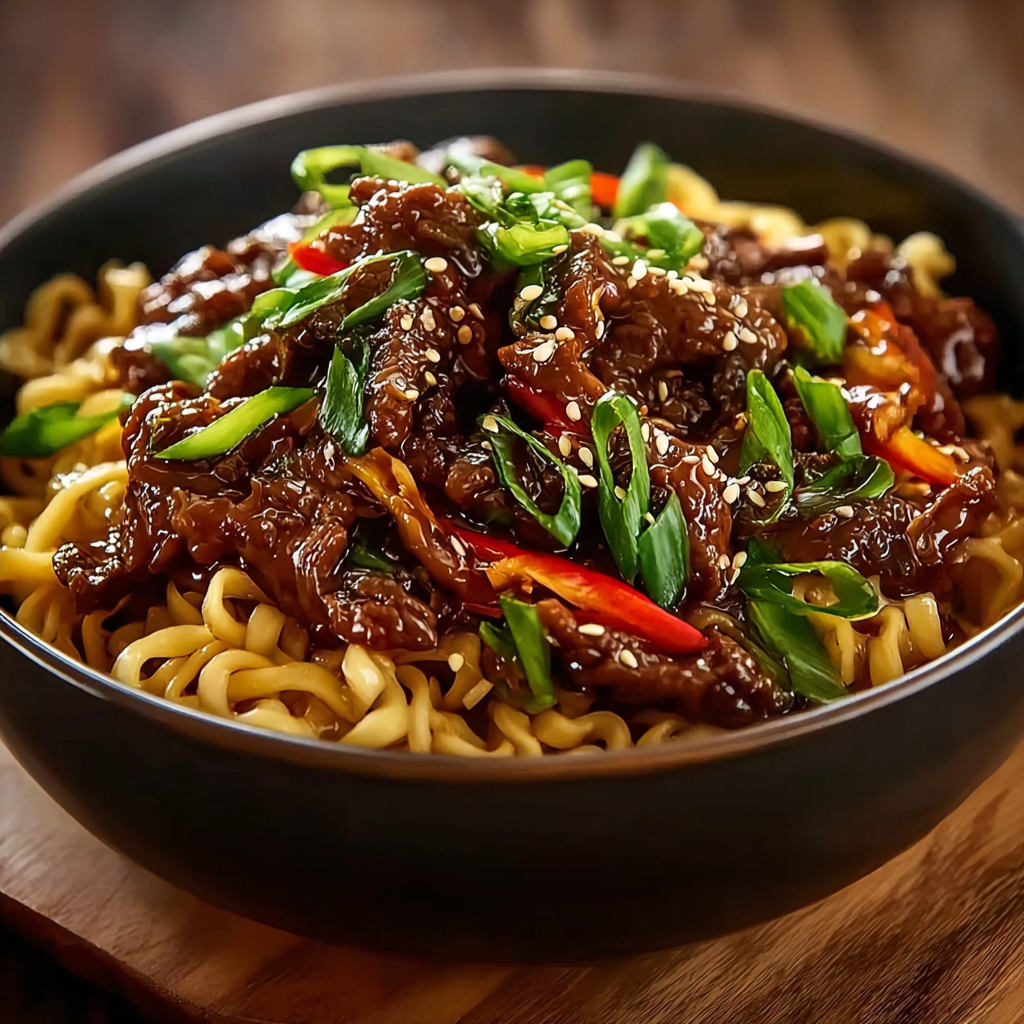
My favorite part of this dish is how the sauce evolves under heat — you’ll see it go from soupy to syrupy as it cooks, clinging to each noodle like a glaze. That transformation is the telltale sign you’ve hit the right balance of cornstarch, sugar, and simmer time. Family members often ask what gave it that restaurant sheen; it’s mostly timing and that last-minute toss off the heat.
Cool leftovers to room temperature for no more than two hours then refrigerate in shallow, airtight containers. Noodles can absorb sauce over time; to revive a slightly dry batch, splash in 1–2 tablespoons of beef broth or water when reheating. Reheat gently over medium-low heat in a skillet with a lid for 3–5 minutes, stirring occasionally, or microwave covered in 30-second bursts. For freezing, separate the beef-sauce mixture from the noodles so texture holds better; thaw overnight in the refrigerator before reheating.
If you prefer a gluten-free version, use tamari in place of soy sauce and look for certified gluten-free hoisin or omit it and add 1/2 teaspoon of miso paste for depth. Swap sirloin for flank steak or skirt steak — both work well if sliced thinly across the grain. For a lighter vegetarian option, replace beef with thick sliced king oyster mushrooms or firm tofu, increase the umami by adding a splash of mushroom broth, and use a little extra cornstarch to help the glaze cling.
Serve these noodles with a crisp side salad dressed in rice vinegar and sesame oil to cut the richness. Garnish with crunchy pickled cucumbers or quick-pickled carrots for acid and texture contrast. For a heartier meal, offer steamed broccoli or bok choy on the side — the bright green vegetables pair beautifully and add nutritional balance. Finish the plate with an extra scatter of sliced green onions and toasted sesame seeds for color.
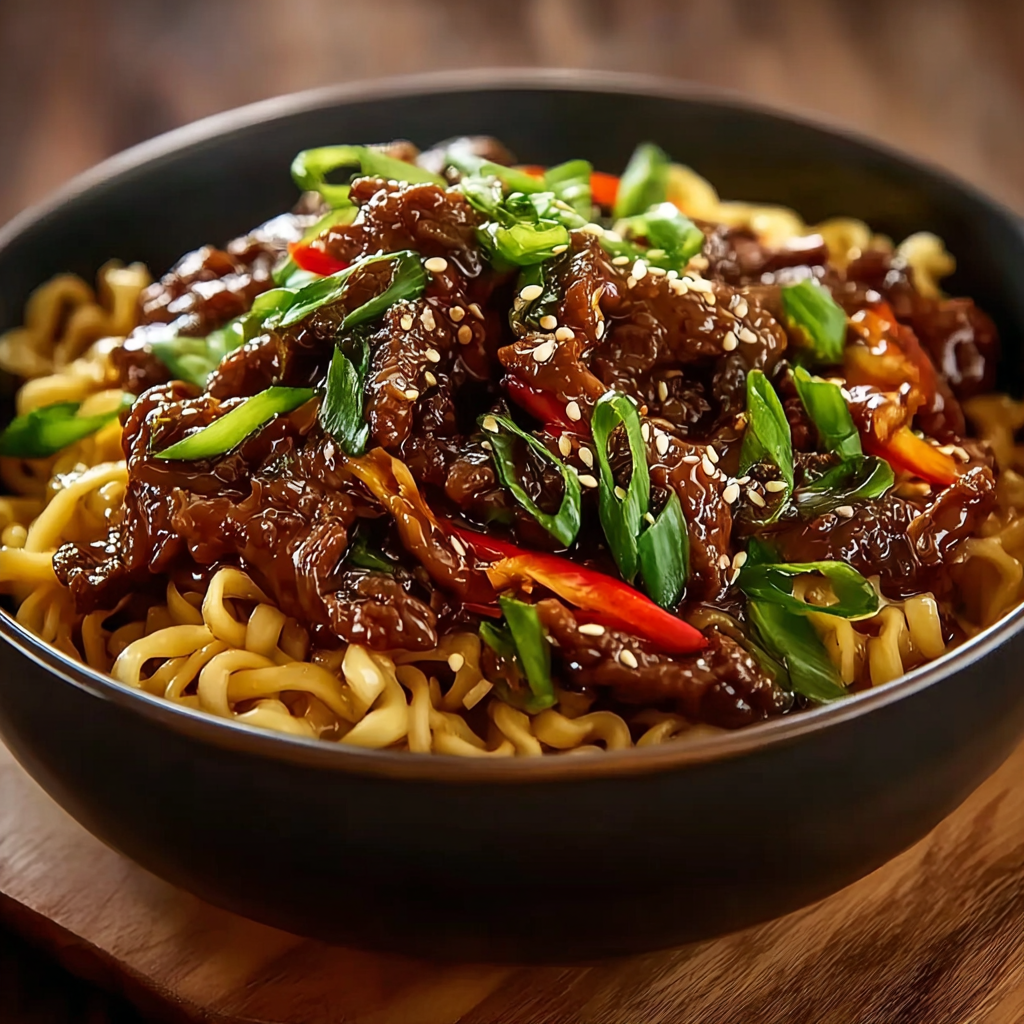
This approach borrows from Chinese-American wok cooking traditions where high heat and quick tosses produce glossy, flavorful dishes with a balance of sweet, salty, and umami. Noodle-and-meat dishes have regional variations across China and Southeast Asia; here the brown sugar and hoisin create a familiar, slightly sweet glaze that many home cooks in the West enjoy. The technique — thin-slicing meat, cornstarch velveting, and finishing in a sticky sauce — is a fusion of practicality and classic stir-fry methods.
In spring, toss in a handful of snap peas or blanched asparagus tips for freshness. In late summer, add thinly sliced bell peppers and julienned zucchini for color. During autumn and winter, switch to heartier greens like bok choy or baby kale, and use a splash of toasted sesame oil for warming aroma. For holiday feeding, double the batch and add roasted shiitake mushrooms or caramelized onions to enhance the festive richness.
Make the sauce ahead and store it in a jar in the refrigerator for up to 3 days. Pre-slice the beef and keep it in a single layer on a tray covered tightly — this makes it easy to cook evenly. Boil and cool noodles ahead, toss with a tablespoon of oil, and refrigerate in a sealed container; reheat briefly in a hot pan with the sauce when ready to eat. This method saves precious weeknight time and keeps textures consistent.
This sticky beef noodles dish is simple to master and endlessly adaptable; whether you’re feeding kids after school or serving friends who linger at the table, it reliably delivers bold flavor with minimal fuss. Give it a try and make it your own — add chili flakes for heat or swap proteins for variety, and enjoy the moments it creates around your table.
Pat the beef very dry before slicing to encourage a good sear and caramelization.
Partially freeze the steak for 20–30 minutes to make ultra-thin slicing easier and more consistent.
Dissolve cornstarch fully in the broth before adding to the pan to prevent lumps and ensure a glossy sauce.
Work in batches when searing to avoid steaming the meat; a hot pan is essential for the signature sheen.
If noodles absorb too much sauce when stored, revive with 1–2 tablespoons of warm beef broth when reheating.
This nourishing sticky beef noodles recipe is sure to be a staple in your kitchen. Enjoy every moist, high protein slice — it is perfect for breakfast or as a wholesome snack any time.
This Sticky Beef Noodles recipe makes perfectly juicy, tender, and flavorful steak every time! Serve with potatoes and a side salad for an unforgettable dinner in under 30 minutes.
Bring a large pot of salted water to a boil and cook the noodles according to package directions until al dente. Drain, toss with a teaspoon of oil to prevent sticking, and set aside.
Pat the sirloin dry and slice thinly across the grain. Lightly season and toss with half the cornstarch to create a silky surface for searing.
Whisk together soy sauce, brown sugar, hoisin, remaining cornstarch, and beef broth until smooth. Keep handy for quick finishing.
Heat a skillet or wok over high heat, add oil, and sear the beef in a single layer for 30–45 seconds per side until just browned. Remove and reserve.
Reduce heat slightly, add remaining oil, then sauté garlic and ginger just until fragrant (20–30 seconds) to avoid bitterness.
Return beef to the pan, pour in the sauce, and stir constantly until the sauce thickens and becomes glossy. Toss in the cooked noodles and heat through for 1–2 minutes.
Remove from heat, garnish with sliced green onions and sesame seeds, and serve immediately while hot and glossy.
Last Step: Please leave a rating and comment letting us know how you liked this recipe! This helps our business to thrive and continue providing free, high-quality recipes for you.
Leave a comment & rating below or tag
@solushcooks on social media!
A lighter take on a classic comfort favorite that swaps pasta for roasted spaghetti squash and keeps all the creamy, cheesy goodness with optional broccoli or chicken for extra heartiness.
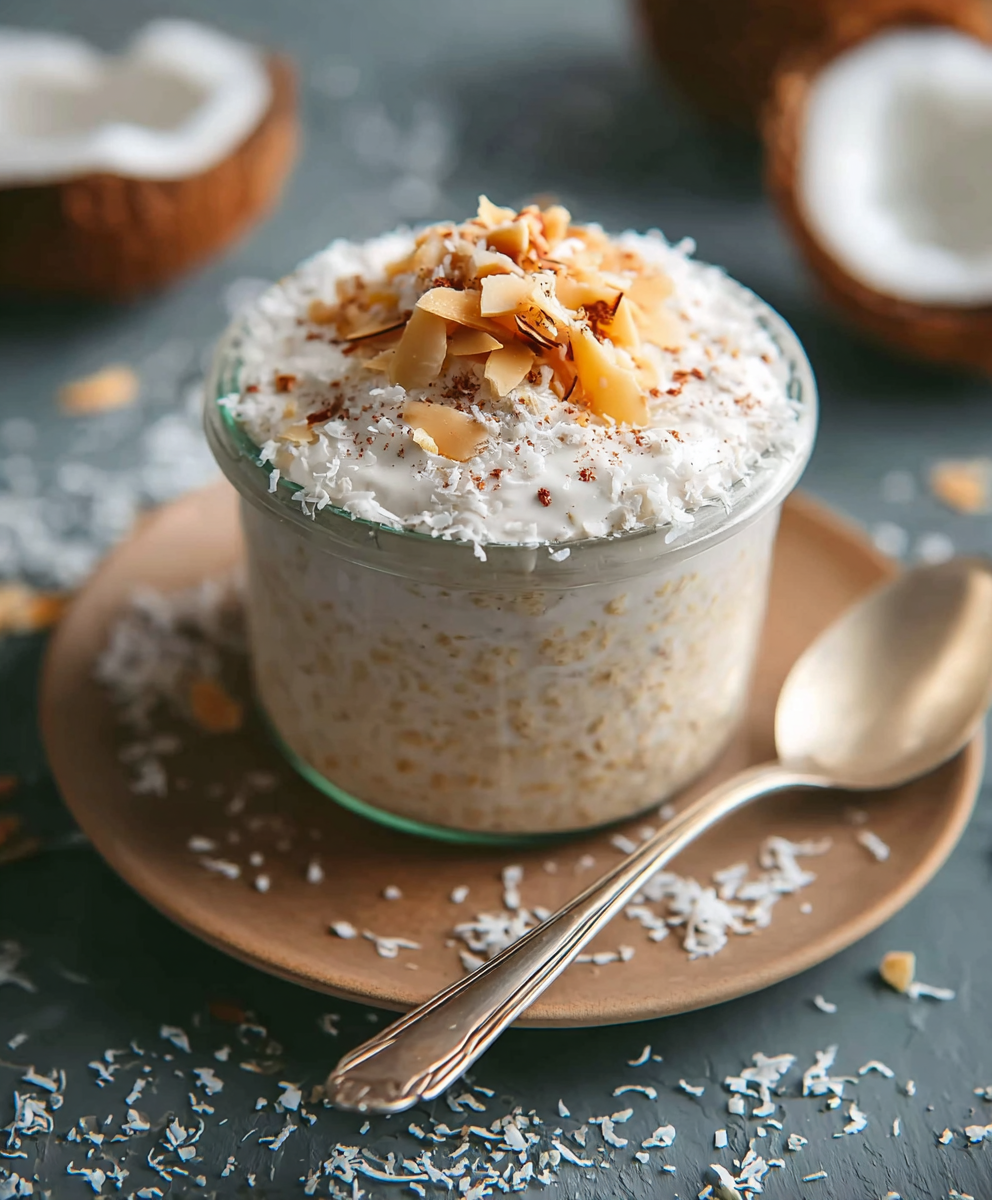
A dreamy no-cook breakfast that tastes like coconut cream pie — creamy coconut milk, tangy Greek yogurt, shredded coconut, and optional banana make mornings feel indulgent and effortless.
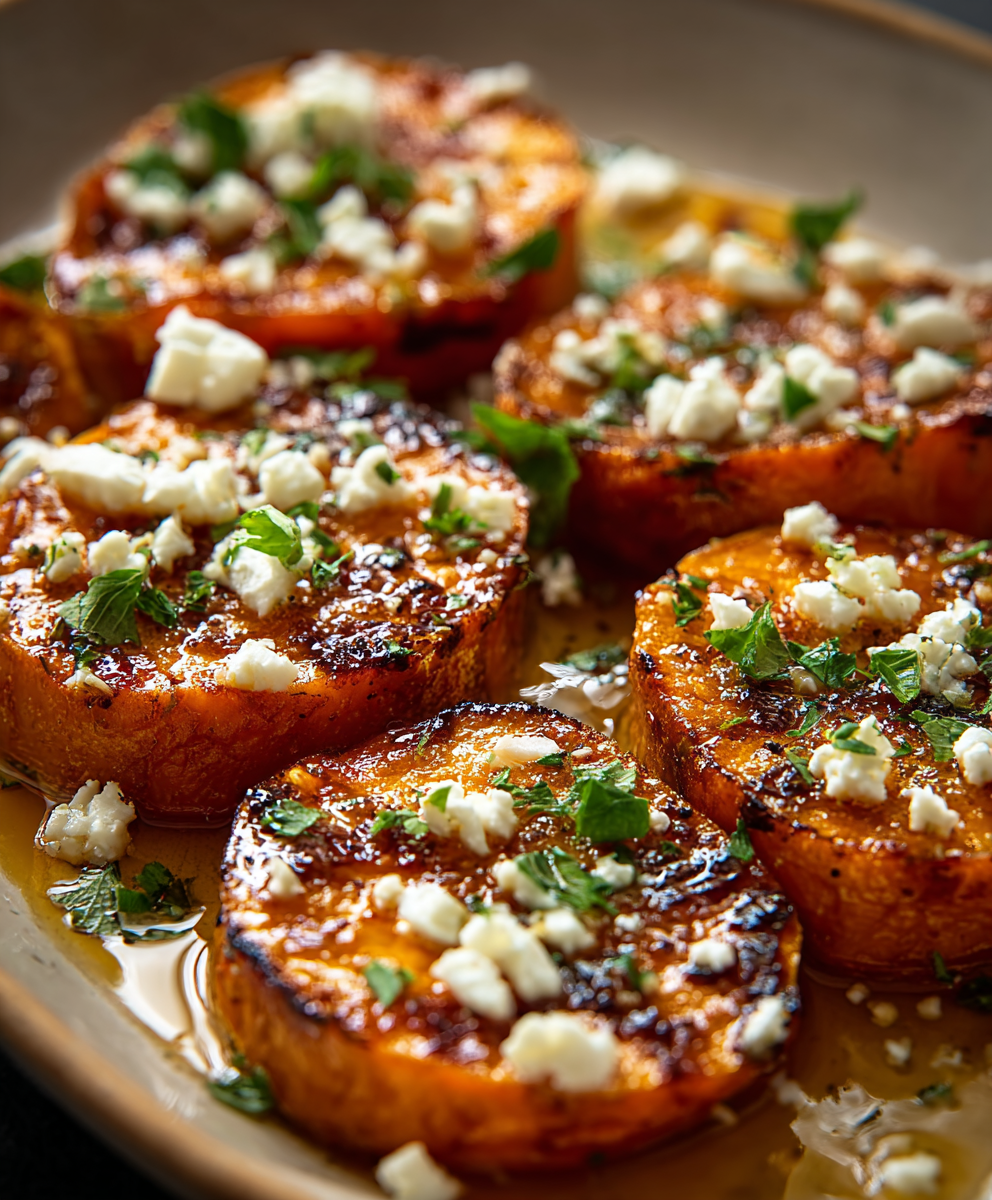
Crisp-edged sweet potato rounds roasted until tender, finished with salty feta, a drizzle of honey, and fresh parsley—an effortless crowd-pleaser for gatherings or weeknights.
Leave a comment & rating below or tag @solushcooks on social media!
Enjoyed this recipe? Share it with friends and family, and don't forget to leave a review!
This recipe looks amazing! Can't wait to try it.
Comments are stored locally in your browser. Server comments are displayed alongside your local comments.

Join to receive our email series which contains a round-up of some of our quick and easy family favorite recipes.