
>>

Hearty, savory beef braised in a sweet-spicy Korean-style broth, served over chewy noodles and topped with scallions and sesame — ultimate comfort in a bowl.
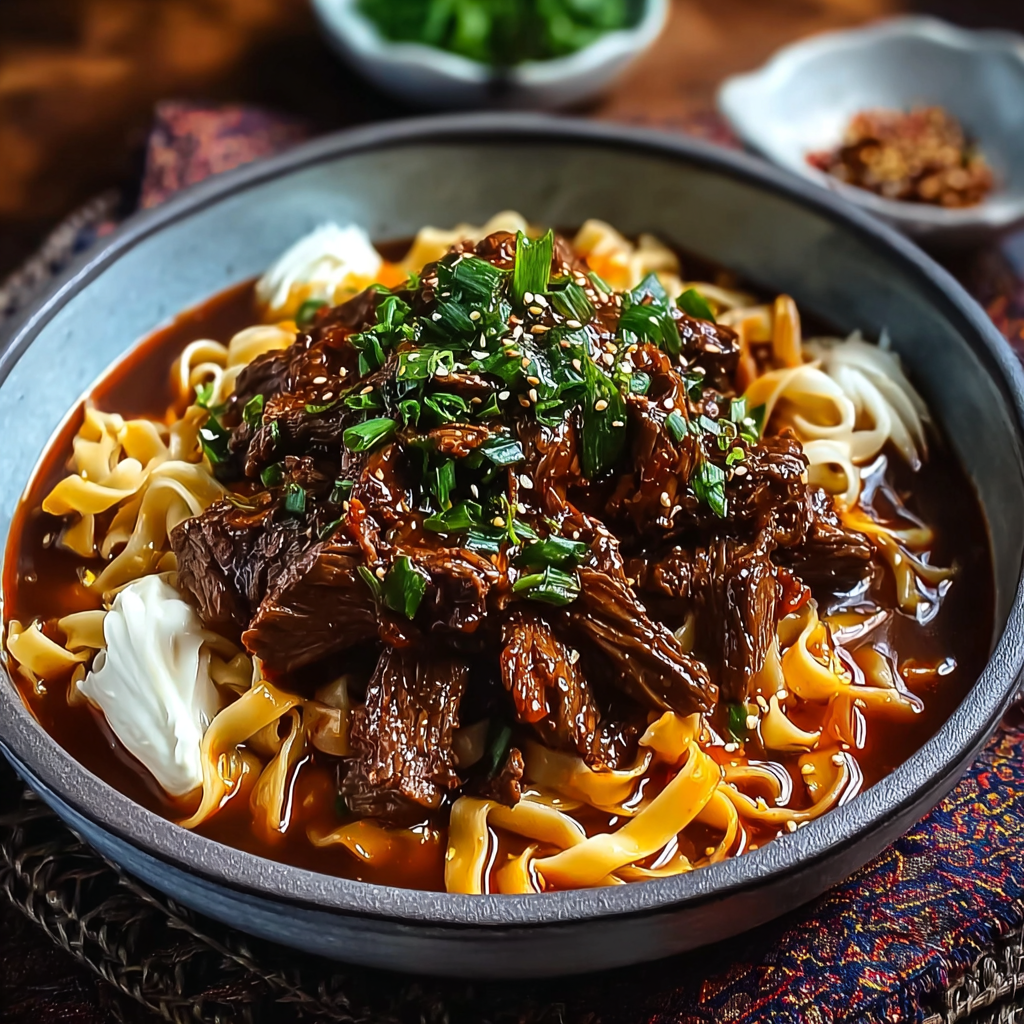
This Korean beef noodles dish is one of those comforting meals that feels like a warm hug on a cold night. I first developed this version while trying to recreate the deep, slightly sweet-and-spicy broth I fell in love with at a tiny noodle shop during a trip to Los Angeles. The combination of slow-braised beef chuck, glossy soy-brown sugar glaze, and a touch of gochujang builds up layers of flavor that cling to every strand of noodle. It’s rich without being heavy, and the final splash of sesame oil brightens the whole bowl.
What makes this preparation special is the way the long, gentle simmer transforms inexpensive beef chuck into tender, shreddable pieces while the sauce concentrates into a silky, umami-rich braising liquid. I often make a large pot on the weekend and find that the leftovers taste even better after a day in the fridge — the flavors meld and deepen. Family and friends always comment on the balance between savory, sweet, and spicy, and how the broth soaks into the noodles differently than a soup-based bowl, making each bite satisfyingly dense and comforting.
Personally, I discovered this balance of sweet and savory while experimenting with a Korean chili paste I had on hand. My partner declared it an instant favorite, and it quickly became our go-to for hosting casual dinners. Watching guests dip noodles into the glossy broth and reach for seconds is one of my favorite kitchen rewards.
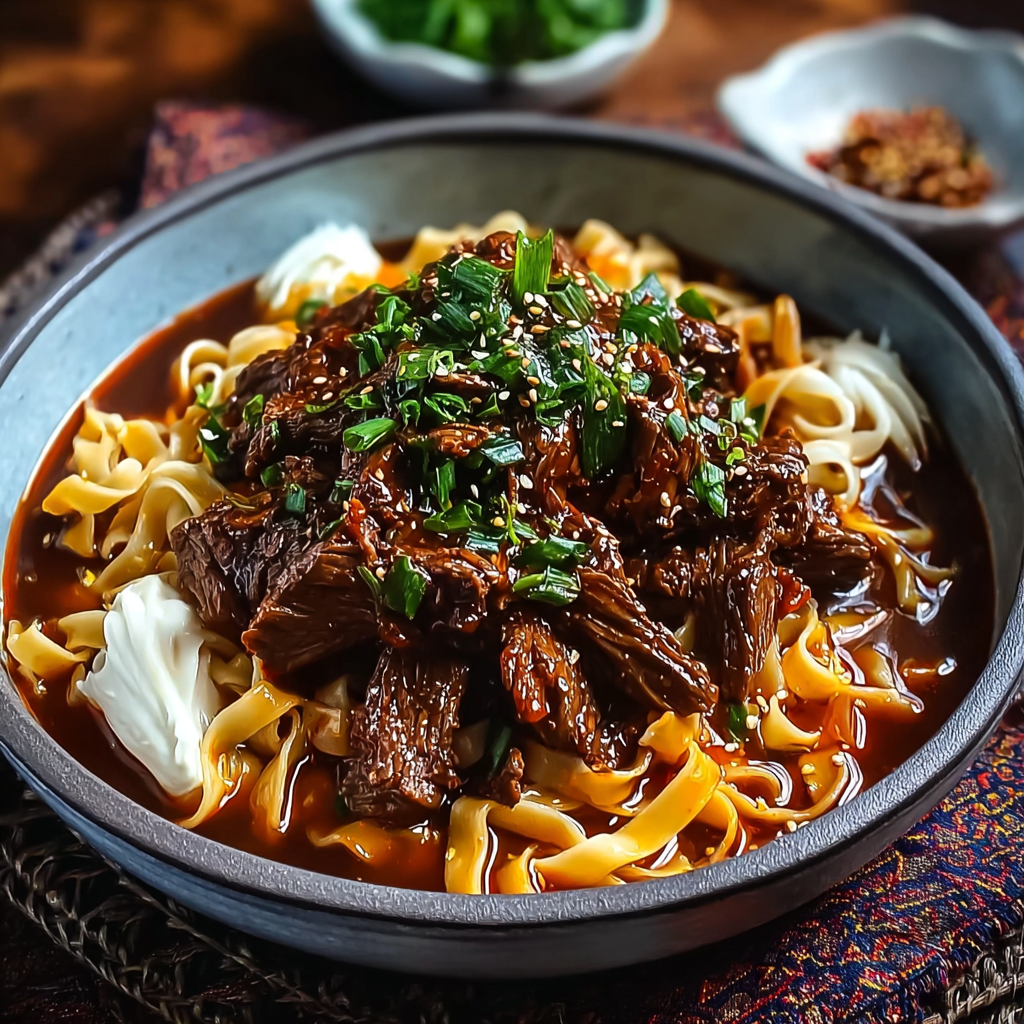
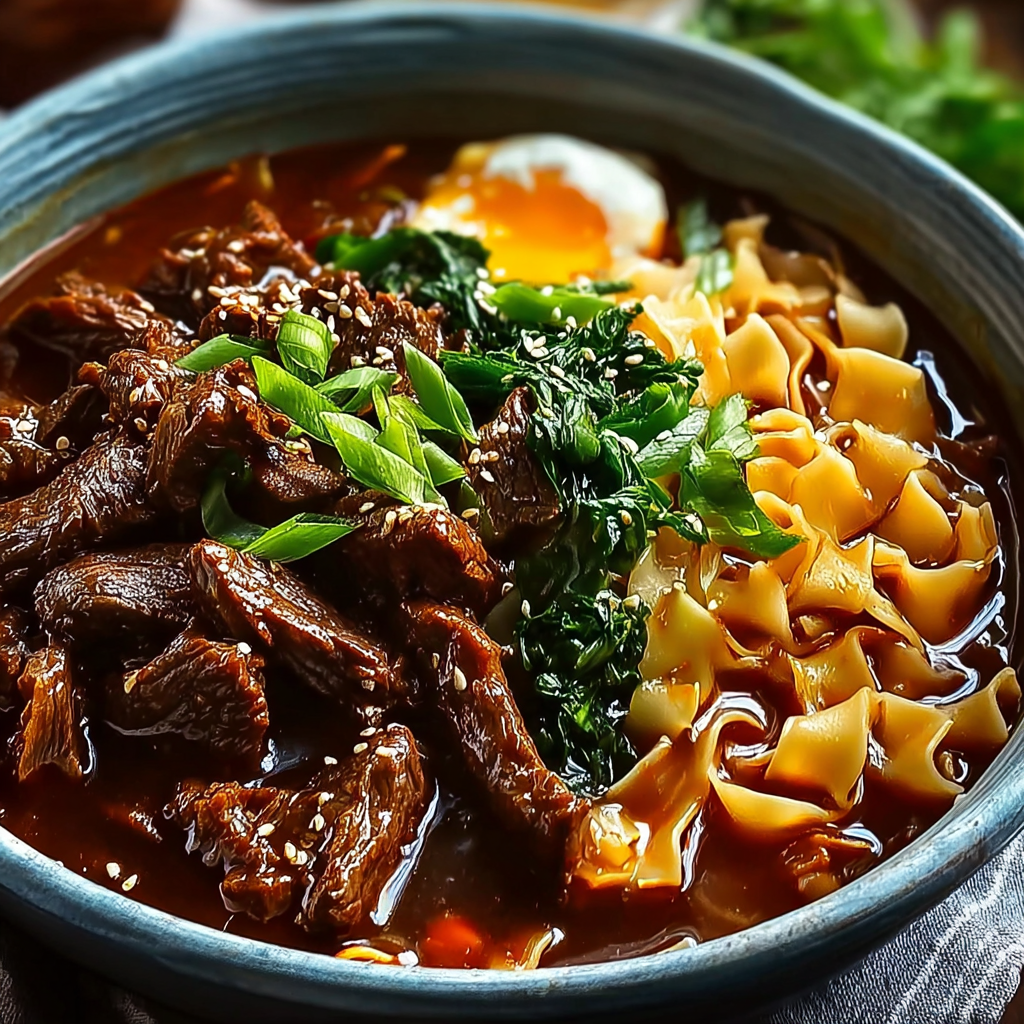
One of my favorite parts of preparing this is watching the sauce transform — from a thin braising liquid to a glossy glaze that clings to the meat and noodles. Family gatherings often turn into noodle-slurping contests, and I love hearing feedback about who added the most gochujang or who preferred an extra handful of scallions.
Cool leftover beef and braising liquid quickly and transfer to airtight containers. Refrigerate for up to 4 days; when reheating, bring to a gentle simmer on the stovetop to avoid drying the meat. For longer storage, freeze the beef and sauce in meal-sized portions for up to 3 months — thaw in the refrigerator overnight before reheating. Keep noodles separate when freezing; they tend to become soft if frozen with the sauce.
If you don't have beef chuck, a short rib or brisket can be used but will alter cooking time and texture — short ribs add more gelatinous richness, brisket will shred differently. For a lighter bowl, swap half the beef broth for unsalted chicken stock. If you’re avoiding gochujang, use 1 teaspoon of Korean red pepper flakes (gochugaru) plus 1 teaspoon honey to mimic sweetness and heat. Replace soy sauce with tamari for a gluten-free option.
Serve with simple sides like quick kimchi, pickled cucumbers, or a crisp green salad to cut through the richness. A soft-boiled egg halves add silkiness and make bowls more filling. For a communal meal, place toppings (scallions, sesame seeds, cilantro, extra chili paste) in small bowls for guests to customize.
While not a traditional single Korean classic, this preparation borrows elements from Korean braises (jorim) and spicy-sweet flavors common in Korean home cooking. The use of gochujang and soy with slow-braised beef echoes the balance of heat, salt and sweetness found in many Korean dishes, adapted here to a noodle-centric format popular in Korean-American eateries.
In winter, serve with hearty sides like roasted root vegetables or steamed bok choy. For spring and summer, lighten the bowl with blanched greens, fresh herbs, and a squeeze of lime to brighten. Swap brown sugar for a touch of maple syrup in autumn to introduce a subtle woodsy sweetness that complements roasted squash sides.
Make a double batch and portion into individual containers with sauce for quick lunches. Pack noodles separately and combine just before serving to retain texture. Reheat sealed containers in a low oven or on the stovetop for even warming; finish with fresh garnishes to refresh the flavor.
End a meal with this noodle bowl and you’ll likely find people lingering at the table a bit longer — savoring the balance of textures and the homey warmth it brings. I encourage you to adjust spice and sweetness to your taste, and enjoy the process of making this bowl your own.
Pat beef dry before searing to ensure a deep brown crust and better flavor development.
Use low-sodium broth or soy sauce to control final saltiness; you can always add more at the end.
Cook noodles separately and combine just before serving to maintain ideal texture.
If the braising liquid is too thin at the end, reduce it uncovered for 10–15 minutes or whisk in a cornstarch slurry.
This nourishing korean beef noodles recipe is sure to be a staple in your kitchen. Enjoy every moist, high protein slice — it is perfect for breakfast or as a wholesome snack any time.
This Korean Beef Noodles recipe makes perfectly juicy, tender, and flavorful steak every time! Serve with potatoes and a side salad for an unforgettable dinner in under 30 minutes.
Pat beef pieces dry and season lightly with salt and pepper. Drying the beef ensures a better sear and deeper flavor.
Heat oil in a Dutch oven over medium-high heat and brown beef in batches for 2–3 minutes per side until a rich crust forms. Transfer to a plate.
Sauté ginger and garlic briefly, then add soy sauce, brown sugar, gochujang, beef broth and water. Scrape fond from the pot.
Return beef to the pot, bring to a simmer, then reduce heat and braise 2–2.5 hours until fork-tender, checking occasionally.
Uncover and reduce 10–15 minutes if needed, stir in sesame oil, and adjust seasoning to taste.
Cook noodles per package directions, drain, divide into bowls, top with beef and sauce, and garnish with scallions and sesame seeds.
Last Step: Please leave a rating and comment letting us know how you liked this recipe! This helps our business to thrive and continue providing free, high-quality recipes for you.
Leave a comment & rating below or tag
@solushcooks on social media!
A lighter take on a classic comfort favorite that swaps pasta for roasted spaghetti squash and keeps all the creamy, cheesy goodness with optional broccoli or chicken for extra heartiness.
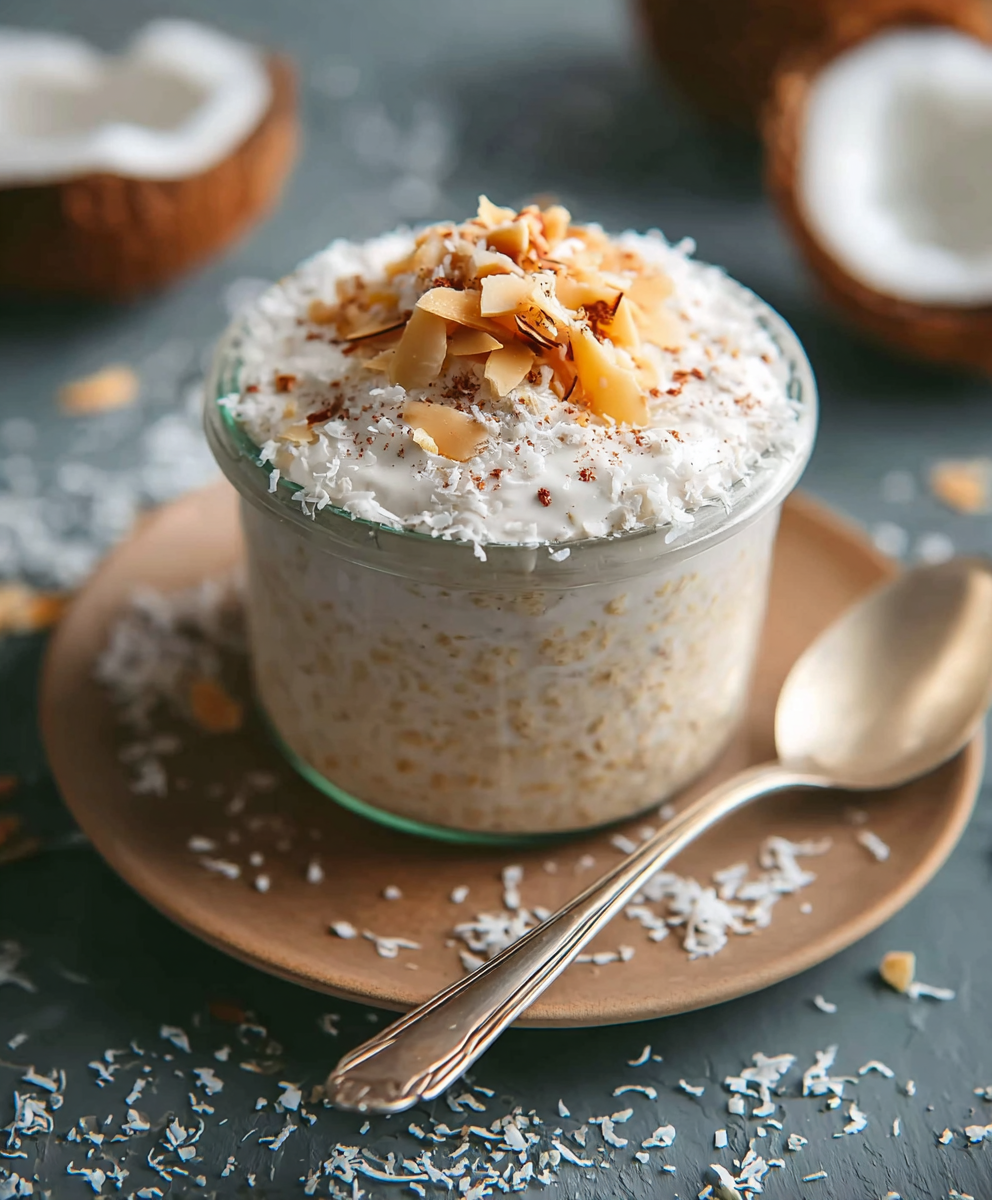
A dreamy no-cook breakfast that tastes like coconut cream pie — creamy coconut milk, tangy Greek yogurt, shredded coconut, and optional banana make mornings feel indulgent and effortless.

Crisp-edged sweet potato rounds roasted until tender, finished with salty feta, a drizzle of honey, and fresh parsley—an effortless crowd-pleaser for gatherings or weeknights.
Leave a comment & rating below or tag @solushcooks on social media!
Enjoyed this recipe? Share it with friends and family, and don't forget to leave a review!
This recipe looks amazing! Can't wait to try it.
Comments are stored locally in your browser. Server comments are displayed alongside your local comments.

Join to receive our email series which contains a round-up of some of our quick and easy family favorite recipes.